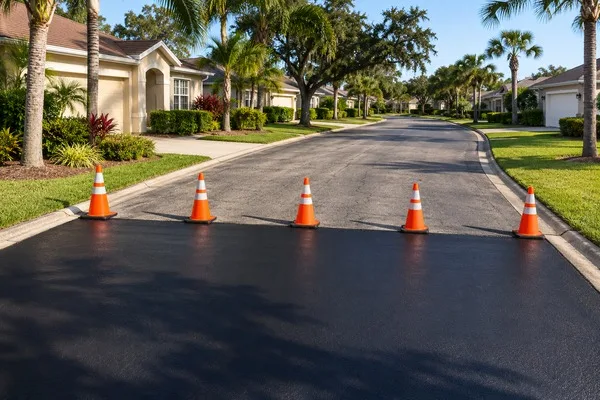
Sealcoating HOA roads with minimal resident disruptions is possible with clear notice of when their road will close and how access will work during sealcoating. With crack filling done first, the community split into sections, and residents told exactly what to expect, a board can protect its private roads without leaving anyone stuck in their driveway.
At Reliable Pavement Maintenance, we work with communities across Lake County from our base in Tavares. If your streets are due, reach out to our team or call (407) 924-8228 to start a community sealcoating proposal.
Why Do Private HOA Roads Gray and Ravel Without Regular Sealing?
Because Florida sun, rain, and daily traffic slowly break down the asphalt surface. Without a protective seal, the pavement dries out, fades to gray, and starts to loosen at the surface.
When asphalt is new, it is dark and flexible. Over time, UV rays and heat oxidize the binder that holds the surface together. The road turns gray, small stones start to come loose, and water finds its way into cracks. In communities that see afternoon storms most of the summer, that process can speed up.
For a gated community off US 27 in Clermont, those changes show up first on curves, cul-de-sacs, and around the entrance, where turning traffic and landscaping crews put the most wear on the road. Once raveling sets in, the surface wears faster and repairs become larger.
Regular sealcoating slows that process down. Industry experts recommend resealing every three to five years. It keeps the surface dark, protects it from water and sun, and helps the board stretch the life of the roads before bigger repairs are needed.
Why Does Crack Filling Come Before the Sealer Goes Down?
Because sealer is a surface coat, not a crack repair. Filling cracks first keeps water out of the base and gives the sealcoat a solid, even surface to cover.
Cracks are the doorway for water. Left open, they let rain reach the base under the road, which can lead to soft spots and potholes over time. Sealing them before the coating goes down closes those openings and keeps the finished surface looking uniform.
Prep matters in other ways too. Oil stains near driveways or in clubhouse parking need a primer first so the sealer can bond. Depending on the surface, we apply sealcoat by squeegee for rough, porous pavement or by spray for smoother surfaces.
One honest note: roads with widespread cracking, base failure, or severe raveling will not benefit much from sealcoating alone. During the assessment, we will tell you which streets are good candidates and which need repair first. Learn more about our sealcoating services.
How Can the Community Be Split Into Sections So Residents Can Get In and Out?
Plan the work in phases, so only part of the community is closed at a time and every home always has a route in and out.
Start with a map of the community. Mark the entrance, main loop, side streets, cul-de-sacs, and clubhouse lot. Then group streets into sections that can be closed together without cutting off anyone else. Homes on a cul-de-sac may need their section done on its own day, since there is only one way out.
For communities with a single entrance, the entrance road is often split down the middle or done at a quiet time, so traffic can still pass. In larger golf communities near Mount Dora, it can help to schedule the clubhouse area on a day with no events.
We will walk the community with you and help build a section plan that fits your layout, your residents' routines, and your calendar.
How Should Boards Notify Residents and Coordinate Clubhouse Restriping?
Send clear notice letters well ahead of time with the dates, the affected streets, and parking instructions. Then plan clubhouse restriping as part of the same project.
A good notice tells residents which day their street closes, when cars need to be off the road, where to park instead, and when the street reopens. Include a simple map. Remind residents about trash days, deliveries, and landscaping services that may be affected, and post signs at the entrance a few days before work begins.
The clubhouse lot is the natural place to finish. Once it is sealed, we can restripe stalls, arrows, and any accessible spaces so the lot looks sharp for residents and guests. You can see examples of community and HOA sealcoating projects on our work page.
When your board is ready to plan, call (407) 924-8228 or contact Reliable Pavement Maintenance to request a community sealcoating proposal.