· by Hanna Carolina · 5 min read
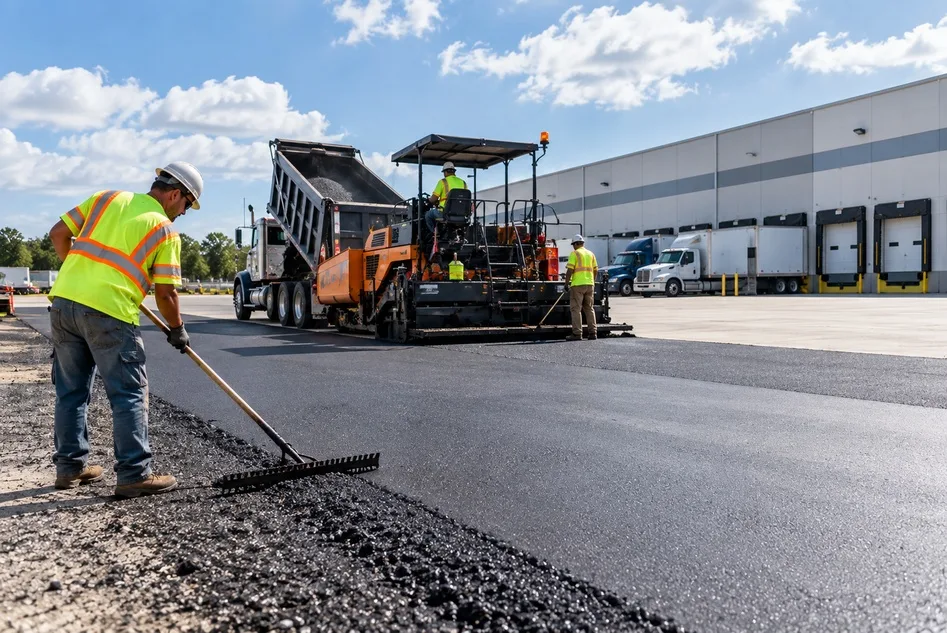
The right asphalt contractors for a truck yard design the pavement around loaded tractor trailers, not passenger cars. That means a thicker, well compacted base, a heavier asphalt section in the lanes trucks actually use, drainage that keeps water out from under it all, and a phasing plan that keeps your yard running while the work gets done.
If your yard is rutting, the pavement is telling you it was not built for what it carries now. At Reliable Pavement Maintenance, we look at how trucks move through your site before we recommend a single inch of asphalt. To get that started, schedule a site assessment by calling (407) 924-8228.
How thick should asphalt and base be for a heavy truck yard?
A heavy truck yard needs a deeper base and a thicker asphalt section than a standard parking lot, and the exact numbers should come from your soils and your traffic. Car lots are commonly paved with an inch and a half to two inches of asphalt. Truck lanes typically need noticeably more, over a thicker compacted base.
The base does most of the work. A compacted limerock or crushed concrete base spreads the load of a loaded trailer before it reaches the sandy subgrade underneath. Skimp on it, and no amount of surface asphalt will stop ruts from forming in the wheel paths. Mix selection matters too. Florida summers soften asphalt, and a stiffer mix designed for heavy traffic resists the slow shoving and rutting that standard mixes show under parked and turning trucks.
Some spots should not be asphalt at all. Where trailers sit on their landing gear at dock doors, the steel pads punch into hot asphalt, so many yards use concrete aprons or dolly pads in those areas. With logistics growth around the Florida's Turnpike interchange in Minneola, more Lake County yards are seeing traffic they were never designed for. A contractor who understands heavy duty asphalt sections will tell you where each material belongs.
Why do drainage and compaction matter so much under traffic lanes?
Water and poor compaction are the two fastest ways to destroy a truck yard. Water softens the base, and a base that was not compacted properly keeps settling under every load, so ruts deepen until the pavement fails.
Proper compaction is measured, not guessed. Each base layer should be placed in lifts and density tested before asphalt goes down, and the asphalt itself needs to be rolled at the right temperature to reach its target density. Ask for those test results. A contractor who does not test cannot prove the yard will hold up.
Drainage starts with grade. The surface needs enough slope to move water off the pavement and toward inlets, swales, or retention areas, rather than letting it pond in the wheel paths. In low lying parts of the county, near Lake Harris around Leesburg and Tavares, the water table can sit high during the rainy season, which makes a well drained base even more important. Standing water in a rut is not just a puddle. It is water working its way down into the base every time a truck rolls through it.
How can paving be phased to keep the truck yard operating?
Paving can be phased by dividing the yard into sections, keeping truck routes and dock access open in one area while crews work in another. With planning, most yards stay operational for the entire project.
A good phasing plan starts with your schedule. Which docks run hardest, and when? Where do trucks stage, and how do they turn? From there, the work is broken into zones, with temporary traffic routes, clear signage, and night or weekend work where it helps. New asphalt needs time to cool before heavy trucks run on it, so the sequence has to account for that, especially in summer heat.
Sometimes the yard has been working around a problem for years. We got a call from a warehouse manager whose employees had developed a morning ritual: placing orange cones in the same deep ruts every day. It had gone on so long that they had worked out a whole system for taking turns on "cone duty." When a workaround becomes a job assignment, the pavement has already cost far more than a repair would. A phased rebuild along a busy corridor like US-441 can fix the problem without shutting the operation down.
What questions should you ask asphalt contractors about heavy-duty experience?
Ask what truck yards and industrial sites they have paved, what base and asphalt sections they recommend for your loads, how they test compaction, and how they will phase the work around your operation. Clear, specific answers are a good sign. Vague ones are not.
A few more questions separate experienced heavy duty contractors from everyone else. Will they recommend concrete at dock aprons and dolly pad areas, or pave everything with asphalt? How will they handle drainage in the lanes that rut today? Do they want a soils report, or are they guessing at the subgrade? What warranty do they offer, and what does it cover? Can they show you a yard they paved several years ago that still holds up under daily truck traffic?
Ready to fix the ruts for good? Call Reliable Pavement Maintenance at (407) 924-8228, or request a truck yard site assessment, and we will evaluate your Lake County yard and recommend pavement built for the loads it carries.