· by Hanna Carolina · 5 min read
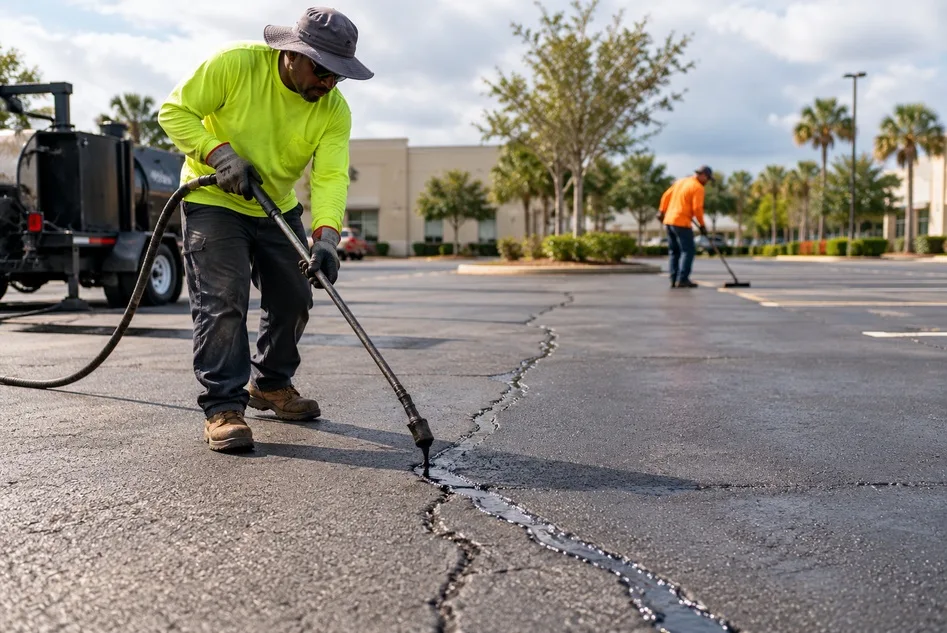
Crack sealing comes before sealcoating because sealcoat is a thin protective coating, not a repair. It cannot bridge an open crack or stop water from getting underneath. If the cracks are not cleaned, routed, and filled first, water keeps reaching the base, and the new coating starts breaking apart along those same lines within months.
That is the difference between a lot that looks good for a season and one that actually holds up. At Reliable Pavement Maintenance, every sealcoating proposal starts with a walk of the lot to see what needs fixing first. If you manage a property and want a straight answer on what your pavement needs, reach out to our crew at (407) 924-8228 and we will come take a look.
How does crack sealing protect the base under your asphalt?
Crack sealing keeps water out of the layers beneath the pavement. Once water reaches the limerock or sand base, it softens it, the asphalt above loses support, and small cracks grow into potholes and broken sections.
Doing it right takes more than squirting filler into a crack. The crew blows out dirt and debris with compressed air, routes wider cracks with a saw or router to create a clean reservoir, and then fills that reservoir with hot pour rubberized sealant. The rubber in the sealant flexes as the pavement expands in the afternoon heat and contracts overnight, so the seal stays bonded instead of popping loose.
Lake County's sandy soils make this step even more important. On busy retail lots along State Road 50 in Clermont, where delivery trucks turn tight at loading docks, water that gets under the surface can wash fine sand out of the base and leave voids. That is how a hairline crack becomes a dip. Cracks that have already spread into a web pattern, often called alligator cracking, usually need patching rather than sealing, and a good contractor will tell you which is which before quoting any asphalt work.
Why does sealcoating over open cracks fail so fast?
Sealcoat over an open crack fails because the coating simply sinks into the gap or forms a thin skin across it. The first time the pavement moves or a heavy load rolls over, that skin breaks, and the crack is back, now with a fresh black edge that makes it easier to see.
Sealcoat is designed to protect the surface from sun, oil, and water. It is applied in a thin layer, and it has almost no flexibility once it cures. It was never meant to fill or bridge anything. When it is sprayed over open cracks, water still finds its way in, and the coating starts flaking along the crack lines first.
It is a familiar pattern on lots up and down the US-441 corridor through Tavares and Leesburg. A property gets a fresh black coat to look good for a sale or a lease signing, but the cracks underneath were never touched. Within a rainy season or two, every crack line shows through again, and the owner is paying for the same lot twice. Skipping the prep does not save money. It just postpones the bill.
What is the right sequence and cure time for crack sealing and sealcoating?
The right sequence is clean, repair, crack seal, then sealcoat, followed by fresh striping. Hot pour crack sealant typically sets quickly, and the sealcoat itself usually needs about a full day before it is ready for regular traffic.
A complete job usually runs in this order. Sweep and blow the entire lot, then treat oil stains so the coating will bond. Patch failed areas and potholes. Clean, route, and fill the cracks. Apply the sealcoat, usually in two coats, by spray or squeegee depending on the surface. Our spray sealcoating gives even coverage across large open areas and tight edges alike. Once it cures, the lot gets restriped.
Weather drives the schedule here. Summer afternoon storms roll through Lake County almost daily, so application is best planned early in the day with a close eye on the radar. Coating that gets rained on before it cures can wash off. For retail and office lots, the work can be phased so half the lot stays open while the other half cures, which keeps tenants and customers moving.
How does skipping crack repair cost more later?
Skipping crack repair costs more because small cracks become base failures, and base failures need cutting, removal, and patching instead of a quick fill. A crack that costs little to seal now can turn into a section that needs to be replaced later.
Cracks are also a safety issue, not just a budget one. One of our property managers wanted his lot looking freshly paved for a big tenant appreciation event on the property's 25th anniversary. When we walked the lot, we found cracks large enough to catch the wheels of the catering carts and send the food flying. Repairing those cracks was the first order of business. The coating could wait. The cracks could not.
Ready to protect your pavement the right way? Call Reliable Pavement Maintenance at (407) 924-8228, or request a sealcoating estimate, and we will walk your Lake County lot, show you what needs repair, and give you a plan that fits your budget.