· by Hanna Carolina · 5 min read
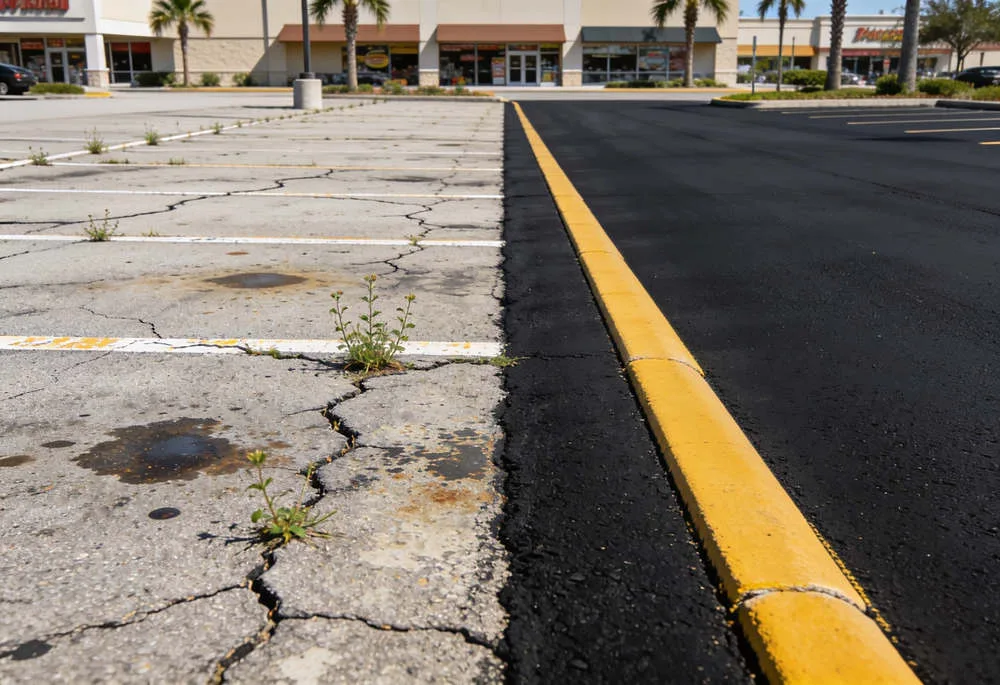
Sealcoating is the right call when the pavement surface is deteriorating but the base is still sound. Repaving becomes necessary when damage has reached the structural layer underneath. The difference between those two scenarios is significant in cost, disruption, and budget timing, and the window to choose the cheaper option closes faster than most facility managers expect. Reliable Pavement Maintenance provides honest on-site evaluations for commercial properties across Central Florida so managers get a straight answer before they budget. Request a free lot evaluation from Reliable Pavement Maintenance or call (407) 924-8228 to find out which side of that line your lot is on.
Reading what the surface is telling you
Facility managers overseeing properties in the MetroWest area of Orlando encounter a predictable progression of pavement damage. It starts with surface oxidation: the lot fades from black to grey, small longitudinal cracks appear along traffic lanes, and the texture begins to roughen. At this stage the base is intact and the fix is straightforward. Crack filling followed by professional spray sealcoating restores the surface, seals out water, and resets the clock on the pavement's service life. The cost per square foot at this stage is a fraction of what comes later.
When that maintenance window is missed, the pattern changes. Water enters the existing cracks, works its way into the base layer, and begins to undermine the structural support beneath the surface. The result is alligator cracking, the interconnected web of fractures that looks like dried mud. Commercial lots in the Altamonte Springs corridor that reach this stage cannot be sealed over effectively. The surface cracks are a symptom of base failure, not just surface wear, and applying sealcoat over compromised base material produces a result that looks better briefly and fails again within a season. The correct repair is removing and replacing the damaged section, which is a fundamentally different scope and cost than routine maintenance.
Potholes are the clearest signal that base failure is already underway. A pothole is not a deep crack. It is a collapse of the surface layer over a void or soft spot in the base. Properties near the Kissimmee US 192 corridor, where heavy tourist traffic and frequent rain events accelerate wear, see this progression more aggressively than lower-traffic sites. A pothole that goes unrepaired continues to grow with each rainfall and each vehicle that crosses it. By the time a facility manager escalates it to a capital budget conversation, the damaged area has typically expanded well beyond what the original pothole covered.
The decision tree in plain terms
The decision comes down to base condition. Surface damage alone, fading, minor cracking, surface raveling, points toward maintenance. Base damage, alligator cracking, potholes, depressions that hold standing water, points toward resurfacing. The complication is that surface and base problems often coexist in different areas of the same lot, which is why a block-by-block or section-by-section assessment matters before any scope is defined.
Signs that sealcoating is still the right answer:
- The lot is grey and oxidized but cracks are isolated, mostly linear, and less than a quarter inch wide
- No visible alligator patterns, no depressions, no areas that hold water after rain
- The last seal application was more than two to three years ago but the lot has not been neglected beyond that
- Traffic loads are consistent with what the lot was originally designed to handle
Signs that resurfacing is likely necessary:
- Widespread interconnected cracking covering more than a quarter of any section
- Potholes anywhere on the lot, regardless of size
- Visible depressions or ruts that collect and hold standing water
- Crack repairs that have been applied and have already re-failed in the same locations
Why the timing of this decision matters so much
The cost gap between maintenance and resurfacing is not marginal. Full asphalt resurfacing on a commercial lot runs many times the cost of a sealcoating cycle. Every year a lot that needs maintenance but does not receive it is a year of additional base exposure, additional water infiltration, and additional load damage. A lot that could have been maintained for several years at modest cost instead reaches the resurfacing threshold early, pushing a major capital expenditure into a budget cycle that was not planned for it.
Reliable Pavement Maintenance's evaluations are designed to give facility managers the honest picture, not the most expensive recommendation. When maintenance is sufficient, that is what the assessment says. When resurfacing is necessary, the scope is defined in sections where possible, with phased scheduling that keeps the majority of the lot operational during the work. Large commercial and multi-tenant properties in Orange and Lake County are not candidates for a single-day closure, and the project plan reflects that reality.
If your Central Florida lot is showing signs of wear and you need a clear answer before the next budget cycle, the on-site evaluation is the right starting point. Call Reliable Pavement Maintenance at (407) 924-8228 or schedule your free on-site evaluation with Reliable Pavement Maintenance and get a documented condition report you can take to ownership.