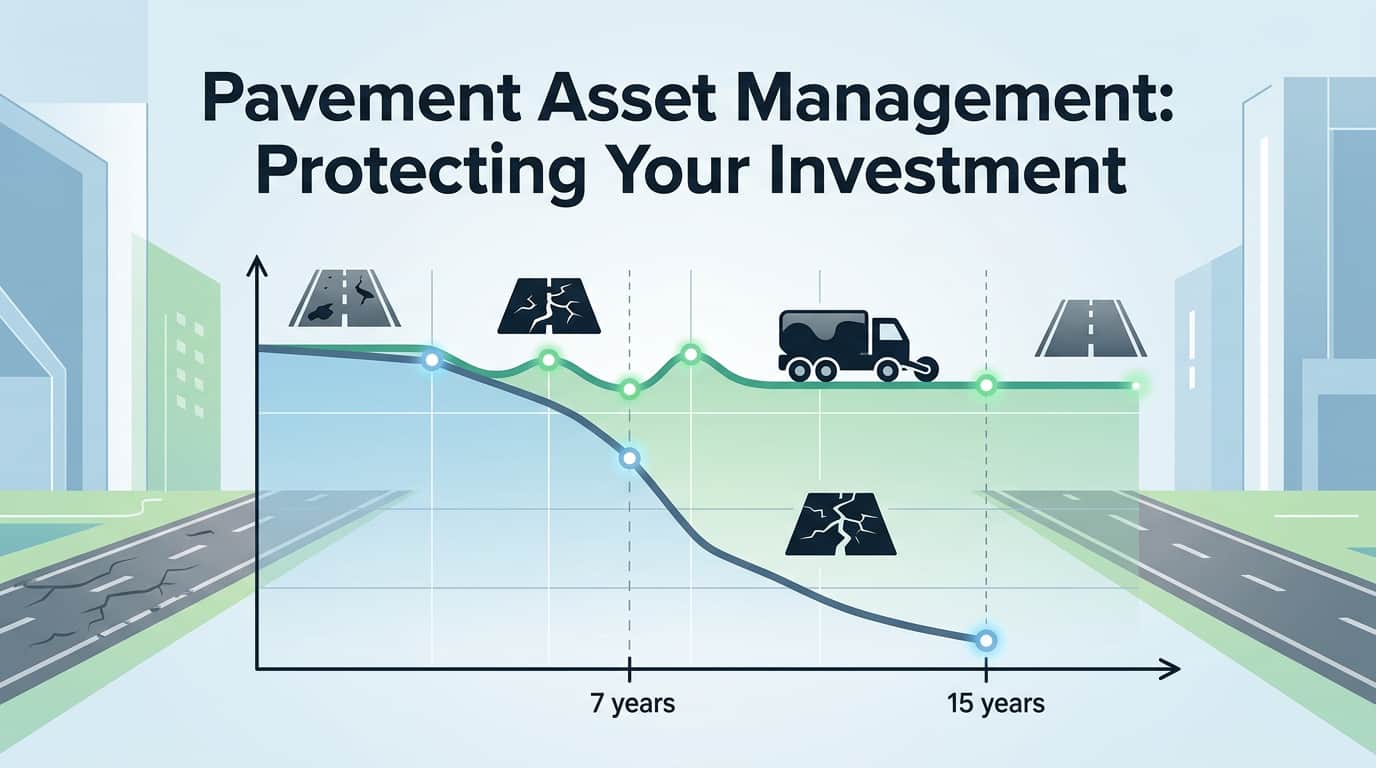
Neglected pavement costs Lake County commercial property owners far more than routine maintenance ever would. A parking lot that gets no attention for five or more years can deteriorate to a point where full milling and resurfacing runs $3–$7 per square foot, compared to just $0.15–$0.25 per square foot for preventative sealcoating. That's a cost difference of 20x or more. If your property sits near a high-traffic corridor like U.S. Highway 441 in Tavares or the bustling retail strips around Leesburg, first impressions start in your parking lot.
Contact Reliable Pavement Maintenance at (407) 924-8228 to schedule a free pavement assessment before small problems become expensive ones.
Why Does Florida's Climate Destroy Asphalt So Fast?
Florida's heat, humidity, and heavy summer rainstorms accelerate asphalt deterioration faster than almost any other climate in the country. Lake County averages over 230 days of sunshine per year, and summer surface temperatures on dark asphalt regularly exceed 150°F. That constant thermal expansion and contraction loosens the binder that holds aggregate together, leading to surface raveling and cracking within just a few years of installation.
Add daily afternoon downpours from June through September, and you've got water pushing into every tiny crack and working its way down to the base. Once moisture reaches the sub-base, you're no longer dealing with a surface problem. You're dealing with a structural one. The sandy soils common throughout Lake County can shift under water pressure, creating soft spots, potholes, and base failures that no amount of sealcoating can fix after the fact.
UV oxidation is just as damaging. Asphalt binder dries out and turns gray, losing its flexibility over 2–4 years without protection. Think of it like sunscreen for your skin. Skip it long enough, and the damage goes deep.
What Are the Core Pillars of Pavement Asset Management?
Pavement asset management means treating your asphalt the same way you'd treat any other capital investment on your balance sheet: with scheduled inspections, a maintenance budget, and a long-term plan.
Inspection: Walk your lot at least twice a year, in spring and again in October after hurricane season. Look for longitudinal cracking along traffic lanes, alligator cracking near drainage areas, and any soft spots that flex when you step on them. Our team typically finds the most damage near dumpster pads and loading zones, where heavy vehicle weight concentrates stress.
Budgeting: Many commercial property managers don't allocate a dedicated pavement maintenance line item until something breaks. That's backwards. A properly maintained asphalt surface has a lifecycle of 20–30 years. One that's ignored may need full replacement in 10–12 years. Budget $0.15–$0.40 per square foot every 2–5 years for preventative treatments, and you'll avoid the $3–$7 per square foot bill for full removal and replacement.
Scheduling: Timing matters in Central Florida. Schedule sealcoating and asphalt treatments during dry months, typically March through May or October through November. Sealer needs 24 hours of dry conditions to cure properly. Scheduling during rainy season is a gamble that often leads to adhesion failures and wasted money.
Does Sealcoating Really Extend Pavement Life?
Yes. Industry experts consistently recommend sealcoating every 2–5 years, and the return on investment is well-documented. A quality sealcoat application weatherproofs the asphalt surface, blocking moisture intrusion, resisting petroleum spills, and slowing UV oxidation. In practical terms, that means a parking lot that might otherwise need major repairs in year 7 or 8 can stay in good condition through year 12–15 with proper maintenance.
Crack filling works hand-in-hand with sealcoating. Any crack wider than 1/4 inch should be filled before sealer goes down. Unsealed cracks allow water to penetrate the base layer, and in Lake County's sandy soil conditions, that water causes base instability quickly. We use both hot and cold crackfill products depending on crack width, depth, and the time of year.
Together, sealcoating and crack filling form the foundation of any cost-effective asphalt maintenance program. For a commercial property in Clermont or Mount Dora, spending $2,000–$5,000 on these treatments every few years can push back a $40,000–$80,000 resurfacing project by a decade or more.
How Does Pavement Maintenance Improve Long-Term ROI?
Every dollar spent on preventative maintenance saves roughly $6–$10 in future repair costs. That ratio is the core argument for treating pavement as a managed asset rather than a fixed expense you ignore until something fails.
Here's how the lifecycle math works in practice. A 20,000 square foot commercial parking lot installed today might cost $60,000–$80,000. With a structured maintenance program that includes sealcoating every 3–4 years and prompt crack filling, that same lot can realistically last 25–30 years. Skip the maintenance, and that same lot may need milling and resurfacing after 12–15 years at a cost of $60,000–$140,000. That's not a hypothetical. In our 40+ years serving Lake County, we've seen that outcome many times at commercial centers that deferred maintenance through multiple ownership or management transitions.
Well-maintained pavement also directly affects tenant satisfaction and customer perception. A cracked, faded, poorly striped parking lot near Tavares or Eustis sends a message before anyone walks through your door.
Does Local Expertise Matter for Sealcoating in Lake County, Florida?
Local knowledge makes a real difference, especially for drainage and soil conditions. Sealcoating in Lake County, Florida requires understanding how water moves across a given site, because Lake County's name isn't a coincidence. Properties near Harris Chain of Lakes or along low-lying areas near Leesburg deal with standing water after heavy rains that can undermine pavement long before visible damage appears.
Asphalt contractors who work across the state without regional specialization often miss these drainage patterns during site evaluation. We look at slope, adjacent landscaping, downspout discharge points, and catch basin conditions before recommending any treatment plan. A parking lot that drains poorly may need regrading or drainage corrections before sealcoating delivers full value.
Soil composition matters too. The fine sandy soils throughout much of Lake County don't compact as firmly as clay-heavy soils found elsewhere. That means base layer preparation is especially critical during new construction or major repairs, and it means property managers should pay close attention to any soft spots that develop near the edges of pavement, where base depth is often shallowest.
For commercial property owners across Tavares, Clermont, Mount Dora, and surrounding areas, working with Reliable Pavement Maintenance, Inc. means working with a team that knows your specific conditions. Not a contractor who shows up with a one-size-fits-all approach.
Ready to Protect Your Pavement Investment?
Your parking lot is one of the most visible and most used assets on your property. A structured pavement asset management plan, built around regular inspections, timely crack filling, and scheduled sealcoating in Lake County, Florida, keeps that asset performing for decades without the painful cost of emergency repairs or early replacement.
The math is clear. The maintenance window is short. And the longer you wait, the fewer options you have.
Call Reliable Pavement Maintenance at (407) 924-8228 to schedule your free property assessment. We'll give you an honest evaluation of your pavement's condition and a maintenance plan that fits your budget, no pressure, no upselling.