· by Hanna Carolina · 5 min read
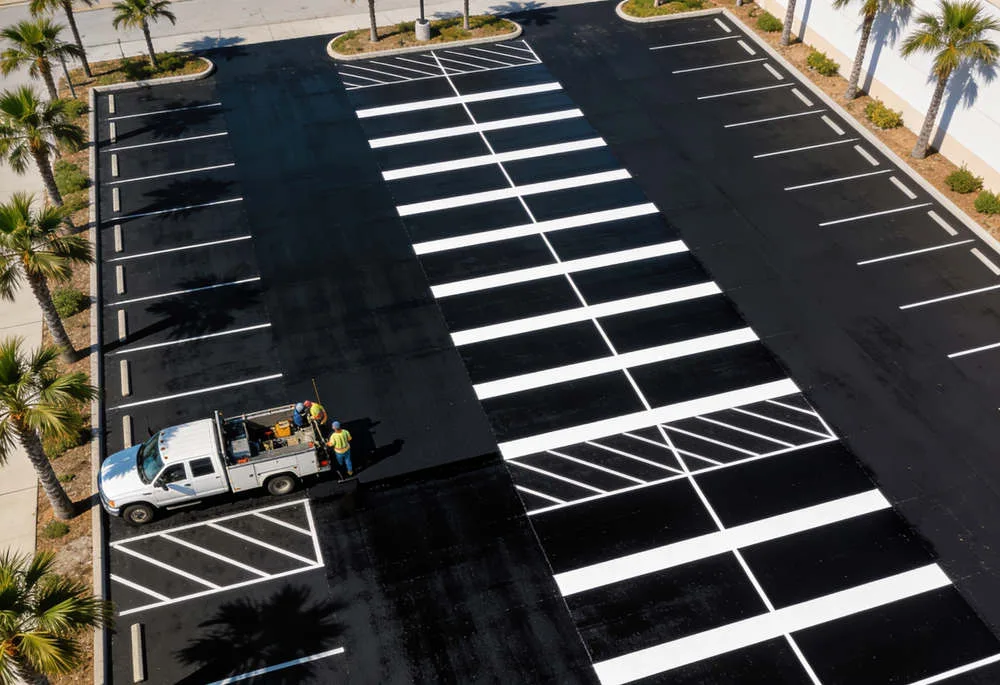
Commercial parking lots in Central Florida should be sealcoated approximately every two to three years. That interval is shorter than national recommendations because Florida's combination of intense UV exposure, heavy rainfall, and year-round traffic accelerates surface oxidation and pavement breakdown faster than most other markets. Staying on that cycle at a modest per-square-foot cost protects an asset that costs many times more to replace than to maintain. Reliable Pavement Maintenance works with property managers across the region to build and keep that schedule. Request a free lot assessment from Reliable Pavement Maintenance or call (407) 924-8228 to get a maintenance timeline built around your specific property.
Why Florida accelerates pavement wear
A commercial parking lot in the Clermont area of Lake County takes a different kind of punishment than pavement in a northern climate. The UV index in Central Florida is among the highest in the continental United States for most of the year. UV radiation oxidizes the binder in asphalt, making the surface brittle and prone to cracking. Then come the afternoon thunderstorms: water enters those cracks, softens the base, and accelerates the deterioration cycle from below. Add the weight of delivery trucks and daily passenger traffic and you have a surface that is aging on multiple fronts at once. Sealcoating interrupts that cycle by restoring a protective layer over the oxidized surface, slowing UV penetration and sealing small cracks before they become structural problems.
The economics are straightforward for property managers overseeing facilities in the Four Corners area and similar mixed-use corridors. A full asphalt repaving project on a mid-size commercial lot is a significant capital expenditure that most maintenance budgets treat as an exceptional event. Routine spray sealcoating on a two-to-three-year cycle costs a fraction of that and, when applied consistently, can extend the functional life of the underlying asphalt by years. The math on deferred maintenance is not favorable: a lot that goes five or six years without sealing typically requires more aggressive crack filling and patching before sealing can even be applied, which drives the cost of each subsequent service upward.
Retail centers near the Florida Mall corridor in Orange County demonstrate this pattern clearly. Lots that receive consistent maintenance on schedule tend to look significantly better at the ten-year mark than comparable lots that were sealed once and then left alone. That visible condition matters to tenants and their customers, and it affects how the property is perceived and valued.
How to build a realistic maintenance timeline
The starting point for any maintenance schedule is the current condition of the lot. A newly paved surface should cure for sixty to ninety days before the first seal application. After that initial application, the two-to-three-year cycle begins. For lots that have not been on a regular schedule, a condition assessment identifies which areas need patching or crack filling before sealing, which affects the scope and sequencing of the first project.
Factors that can shorten the interval include:
- High truck traffic or heavy delivery vehicle routing across the lot surface
- Lots with significant tree canopy that deposits debris and traps moisture in low spots
- Surfaces with existing fine cracking that allow water infiltration between seal cycles
- Areas that receive concentrated standing water after storms due to grade or drainage issues
Factors that may allow the longer end of the two-to-three-year range include newer pavement in good condition, lower daily traffic counts, and lots with effective drainage that does not allow water to pond after rain events.
Scheduling around tenants: a practical example
The logistical challenge most property managers raise is not whether to sealcoat, but how to do it without shutting down a working commercial lot. A multi-tenant retail center typically cannot close its parking lot for a full day without affecting every business on the property. The practical solution is phased scheduling: seal one section of the lot while the remainder stays open, rotate through sections over two to three days, and time the work around the lot's low-traffic hours. Early morning start times allow sections to cure before the afternoon peak.
Reliable Pavement Maintenance handles the phasing plan as part of the project scope. The crew applies premium multi-coat spray application rather than squeegee or brush methods, which produces a more uniform, durable finish on large commercial surfaces and allows faster section-by-section completion. Tenants are notified in advance with clear signage, and the rotation keeps at least the majority of the parking inventory open at all times.
What the assessment tells you
A free lot assessment gives property managers something specific: a documented condition report, a recommended maintenance sequence, and a realistic timeline for the next two to three service cycles. That document is useful for budget planning, for conversations with ownership about capital versus maintenance expenditures, and for creating a defensible paper trail of proactive property stewardship. A lot that has been consistently maintained on a documented schedule is in a different position, practically and legally, than one managed reactively.
If your Central Florida commercial property does not have a sealcoating schedule in place, the assessment is the right starting point. Call Reliable Pavement Maintenance at (407) 924-8228 or schedule your free lot assessment with Reliable Pavement Maintenance and get a maintenance plan built around your property's actual condition and your tenants' schedule.