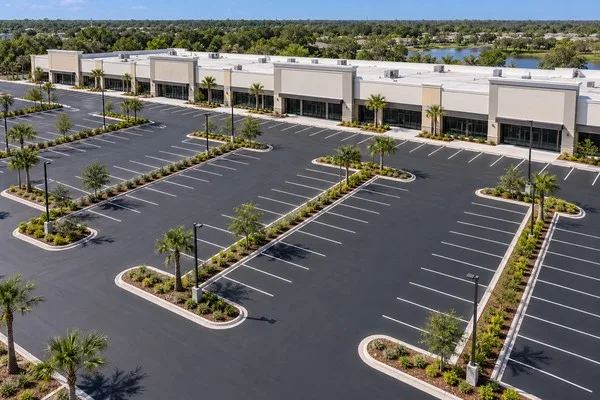
A multi-year sealcoating plan turns pavement from a surprise expense into a predictable line item. By resealing on a regular cycle, handling cracks between cycles, and phasing work across buildings and budget years, you spread the cost, extend the life of your asphalt, and push an expensive full repave much further down the road.
At Reliable Pavement Maintenance, we help Lake County property managers plan pavement work, not just react to it. To start building your plan, reach out to our team or call (407) 924-8228.
Why should retail centers plan sealcoating years ahead?
Because pavement wears out on a schedule whether you plan for it or not. Planning lets you pay for maintenance in small, steady amounts instead of absorbing one large repair bill when the lot finally fails.
Florida is hard on asphalt. Strong sun oxidizes the surface, turning it gray and brittle. Heavy summer rain finds every crack and works into the base. Retail centers along US 27 in Clermont or US 441 in Leesburg see constant car traffic plus delivery trucks, which speeds up the wear.
Owners also want predictability. When you answer to an owner or an asset manager, a pavement line that jumps wildly from year to year is hard to defend. A clear multi-year schedule shows exactly what is planned, when, and why.
Most importantly, planned maintenance costs less over the life of the lot. Sealcoating and timely repairs protect the asphalt you already have, so you are not paying to replace it years before you should.
How often should high-traffic retail lots be resealed?
Most lots should be resealed every three to five years, depending on traffic and condition. High-traffic retail centers often land toward the shorter end of that range.
Drive lanes, entrances, and areas in front of anchor tenants take the most wear. Loading zones and dumpster pads see heavy trucks. Outer parking rows may hold up longer. A good plan reflects those differences instead of treating every square foot the same.
Application method matters too. Spray works well on smooth pavement. Squeegee application lays down a thicker coat and is better for rough, porous surfaces. Oil-soaked areas near parking stalls need an oil spot primer first, or the sealer will not bond.
Normal curing time is about 24 hours in moderate temperature and humidity, so scheduling matters for a busy center. Planning reseal dates years ahead makes it easier to coordinate with tenants and pick slower windows. You can see our full range of sealcoating and asphalt services.
Why does crack sealing between cycles matter?
Because cracks are how water gets under your pavement, and water is what destroys the base. Sealing cracks between reseal cycles keeps small problems from turning into potholes and failed sections.
In Lake County, summer storms can soak a lot several afternoons a week. Each crack that stays open lets more water reach the base, and every vehicle that passes pushes the weakened pavement down a little more.
Building crack sealing into the years between sealcoats is one of the most cost-effective things you can budget for. It is a small line item compared with removal and replacement.
It also protects your sealcoating investment. Sealcoat is not meant to fix structural problems. Pavement with extensive cracking, base failure, or severe raveling will not benefit much from it. Keeping cracks under control, and repairing failed areas before you seal, makes each sealcoat cycle last and look the way it should.
How do you phase work across buildings and budget years?
Divide the property into sections, rank them by condition and traffic, and schedule them across several budget years. That way, no single year carries the whole cost.
One of our customers had a binder full of invoices for past pavement fixes. She was new to the property and did not know what work had been done or where. She had a budget meeting coming up.
We walked the property together and prioritized repairs by need. That gave her a clear plan she could explain to the budget team, instead of a stack of old paperwork.
A typical phased plan might handle structural repairs in the worst areas first, then sealcoat the busiest sections the following year, with other buildings rotating in over time. Striping and ADA markings follow each sealcoat, so every section looks finished. Phasing also keeps part of the lot open while work happens, which tenants appreciate.
How do you get a maintenance plan and estimate?
Start with a property walk-through. We look at the condition of each section, note cracking, oil spots, drainage problems, and worn markings, and talk with you about your budget cycle and what your owners need to see.
From there, you get a plan that lays out what should happen and when, with costs you can carry into your budget. It gives you something concrete to show ownership, and it makes future years easier to forecast as the property and its tenants change.
We are licensed, insured, and bonded, and we handle the work ourselves, from asphalt repair and sealcoating to striping, ADA compliance, signage, and wheel stops.
If you are ready to stop reacting to pavement failures and start planning for them, contact Reliable Pavement Maintenance or call (407) 924-8228 to request a multi-year sealcoating plan and estimate for your Lake County retail center.