The most common and costly misconception in asphalt maintenance is treating sealcoating as a repair product. Property owners who have delayed maintenance on a deteriorating parking lot or driveway sometimes expect a sealing application to restore what the surface has lost. It cannot, and understanding why matters before spending money on the wrong solution. Contact Reliable Pavement Maintenance at (407) 924-8228 for an assessment of your asphalt before deciding which service it actually needs.
What is asphalt sealer actually designed to do?
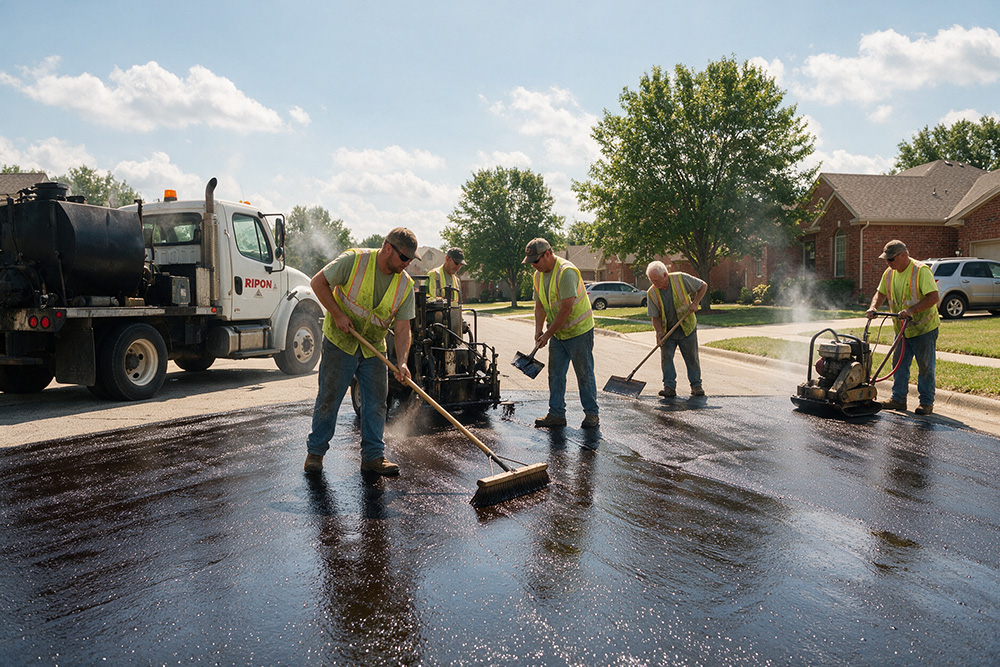
Sealer is a protective coating applied to the surface of existing asphalt in good condition. Its job is to slow the natural oxidation and UV degradation that asphalt undergoes over time, limit water penetration into the surface layer, and extend the functional life of the asphalt that is already there. A properly timed sealcoating application on asphalt in good shape can significantly extend the years before major repair or full replacement becomes necessary. That is what sealer is for: preserving what exists, not restoring what has been lost.
What happens when sealer is applied to asphalt that is already failing?
The underlying problems continue. Sealer applied over cracked asphalt with an eroded base does not fill or structurally address the cracks. It coats them, which can temporarily improve the surface appearance but does not stop water from continuing to penetrate the cracks and reach the base layer beneath. Water in the base layer, particularly through freeze-thaw cycles in colder climates, expands the cracks from below and accelerates the deterioration that was already underway.
In the most straightforward terms: sealing compromised asphalt can make the surface look better while the damage underneath continues to grow. The result is a property owner who spent money on maintenance and still ends up with the repair or replacement cost they were trying to avoid, often sooner than they expected because the sealer created a false sense that the problem had been addressed.
What does failing asphalt actually need before sealing can help?
The sequence matters. Cracks need to be cleaned and filled before sealer goes over them. Areas where the asphalt has begun to crumble, lose aggregate, or develop potholes require patch repair before the surface is sealed. The repair work addresses the structural issues. The sealing that follows protects the repaired and intact surface from the environmental factors that caused the deterioration in the first place. Doing them in the wrong order, sealing first and hoping the cracks are addressed in the process, is how property owners end up spending twice.
What are the signs that asphalt needs repair rather than just sealing?
Visible cracking that has widened beyond hairline surface cracks is the clearest indicator. Alligator cracking, the pattern of interconnected cracks that resembles reptile skin, indicates base failure rather than simple surface wear and requires repair before any surface treatment. Soft spots, areas where the asphalt moves or flexes under vehicle weight, point to base layer problems that sealing will not reach. Potholes and areas where the surface has come apart entirely need patching before the surrounding surface can be sealed.
A surface that has faded to gray but is still structurally intact, with no significant cracking or soft areas, is a good candidate for sealing on its own. The line between the two situations is not always obvious from a quick look, which is why a professional assessment is valuable before committing to a maintenance approach. Reliable Pavement Maintenance can identify where your asphalt falls on that spectrum and recommend the sequence of work that will actually extend its life. Call (407) 924-8228 or reach out online to get an honest evaluation.