Ignoring asphalt damage in Lake County's brutal Florida sun doesn't just look bad. It costs you far more money down the road. A small crack that costs $300 to seal today can turn into a full pavement replacement running $15,000–$40,000 within just a few years. Contact Reliable Pavement Maintenance at (407) 924-8228 before small problems become budget emergencies.
This guide walks you through everything a commercial property owner needs to know about protecting pavement in Central Florida's harsh climate, from spotting early damage to building a maintenance budget that actually works.
Why Does Florida's Climate Destroy Asphalt Faster?
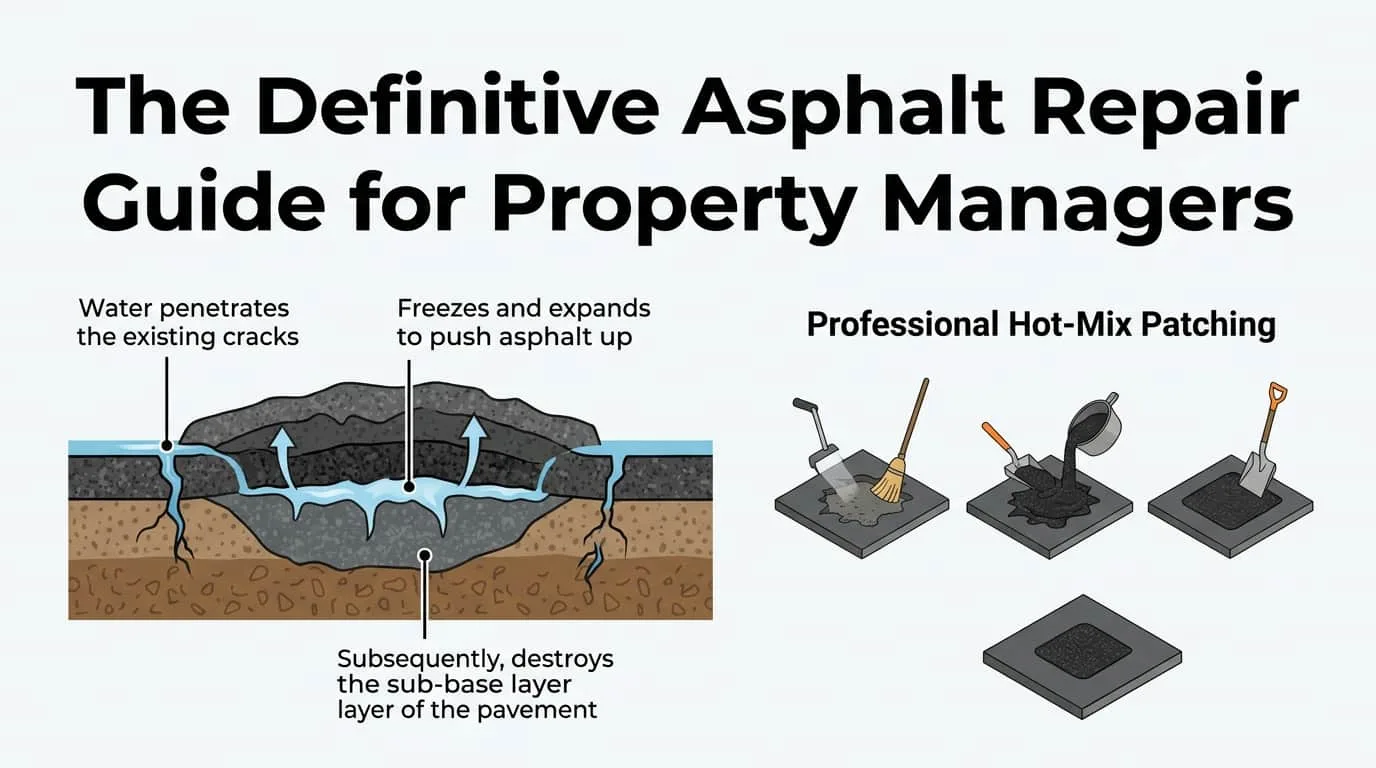
Florida's heat and humidity accelerate asphalt degradation faster than almost any other climate in the country. Lake County summers regularly hit 93°F with humidity levels above 75%, and that combination creates a one-two punch that speeds up pavement failure. UV rays oxidize the binder that holds asphalt together, making the surface brittle and prone to cracking. Then rainwater enters those cracks, erodes the base layer underneath, and causes structural collapse from below.
Properties near Lake Harris or along the US-27 corridor in Clermont see this cycle play out constantly. Pavement that might last 20–25 years in a northern state often needs significant repairs within 7–10 years here without a proper maintenance plan. The good news: a consistent plan keeps your asphalt performing well for its full lifespan, protecting your investment and your tenants' first impression of your property.
What Are the Most Common Asphalt Problems in Lake County?
Three issues show up on almost every commercial property we service across Lake County. Catching them early is the difference between a minor repair and a major capital expense.
Alligator Cracking looks exactly like its name: a network of interconnected cracks forming a scaly pattern across the pavement surface. This signals a base failure, usually caused by water infiltrating the sub-base over time. Once alligator cracking appears, sealcoating alone won't fix it. You'll need asphalt repair or removal and replacement, depending on the extent of the damage.
Potholes form when water gets under the surface, weakens the base, and the pavement collapses under vehicle weight. A pothole that's ignored for one wet season can double in size. Infrared asphalt repair is one of the most effective methods for pothole patching because it bonds the new material to the existing asphalt without leaving cold joints that crack again.
Raveling is the gradual loss of aggregate from the pavement surface, leaving a rough, pitted texture. You'll often notice this in older Tavares or Leesburg commercial lots that haven't been sealed in five or more years. Raveling weakens the surface layer and accelerates cracking. A timely sealcoating application can stop raveling in its early stages and restore surface integrity.
How Do You Choose the Right Repair Solution?
The right repair depends entirely on the type and severity of damage. Here's a quick breakdown:
Crack Sealing works best when cracks are still isolated, less than an inch wide, and the base is sound. Hot rubberized crack filler is pressed into the crack, creating a flexible seal that expands and contracts with temperature changes. Expect to pay $0.50–$2.00 per linear foot for commercial crack sealing in Central Florida.
Sealcoating protects the surface from UV oxidation, water intrusion, oil, and fuel spills. Industry professionals recommend sealing every 2–5 years, depending on traffic volume and pavement condition. For sealcoating in Lake County, Florida, spray application is typically preferred on smooth commercial lots, while squeegee application works better on rougher, more porous surfaces. A fresh sealcoat also significantly boosts curb appeal, which matters for retail and office properties trying to attract tenants and customers.
Infrared Asphalt Repair uses infrared heating technology to soften and re-compact existing asphalt around damaged areas like potholes or depressions. This creates a permanent, seamless repair that bonds with the surrounding pavement. Infrared repair costs more per square foot than standard cold-patch ($4–$8 vs. $1–$2), but it lasts significantly longer and eliminates the recurring expense of patching the same spot every season.
In our experience serving commercial properties across Lake County, the properties that rely solely on reactive repairs spend 40–60% more over 10 years than those on a scheduled maintenance program.
Does Proactive Maintenance Really Save Money Over 10 Years?
Yes, and the numbers make a compelling case. A 10,000-square-foot commercial parking lot that receives regular crack sealing and sealcoating every 3–4 years will typically cost $12,000–$18,000 in maintenance over a decade. That same lot, left unprotected, will likely require full removal and replacement within 10–15 years at a cost of $40,000–$80,000.
Proactive sealcoating in Lake County, Florida extends pavement life by sealing out the two biggest enemies: UV rays and water. Think of it the same way you'd think about painting wood trim on a building. Skip it long enough, and you're not just repainting, you're replacing the wood entirely.
A practical maintenance schedule for most Lake County commercial properties looks like this:
- Year 1–2: Initial crack sealing and sealcoating after new pavement is placed
- Year 3–5: Re-evaluate surface condition, spot repair any new cracking, re-seal as needed
- Year 6–8: Full assessment of base integrity, address any drainage issues, and infrared patching where required
- Year 9–10: Decide between overlay or full replacement based on base condition
Building these line items into your annual capital expenditure budget prevents the sticker shock of emergency repairs and keeps your property looking professional year-round.
What Should You Ask Before Hiring a Local Asphalt Contractor?
Not every contractor working in Lake County delivers the same quality, and a bad sealcoat job can actually trap moisture and accelerate damage. Before signing anything, ask these questions:
Are you licensed, insured, and bonded in Florida? This protects you from liability if a worker is injured on your property. Any reputable contractor will confirm this upfront.
Do you recommend only what my pavement actually needs? Watch out for contractors who push full replacement when crack sealing would do the job. A trustworthy company will assess your pavement honestly and recommend the most cost-effective solution.
What application method do you use for sealcoating, and why? Spray and squeegee methods each suit different pavement conditions. A contractor who asks about your pavement type before recommending a method knows what they're doing.
Can you provide references from similar commercial properties in the area? Local experience matters. A contractor who has serviced retail centers and office parks in Tavares, Clermont, or Eustis understands the specific wear patterns and drainage challenges common to Lake County properties.
What's your timeline, and how long before the lot can be reopened? Standard sealcoating cures in about 24 hours under moderate temperature and humidity. Your contractor should give you a clear timeline and work around your business operations.
Ready to Protect Your Pavement Investment?
Your parking lot is often the first thing tenants, customers, and visitors see when they arrive at your property. A cracked, faded surface signals neglect. A clean, well-sealed lot signals professionalism and attention to detail.
Reliable Pavement Maintenance has over 40 years of experience serving commercial property owners across Lake County and Central Florida. Our team handles everything from crack sealing and sealcoating to full asphalt repair and replacement. We'll assess your pavement honestly and recommend what it actually needs.
Call us at (407) 924-8228 or reach out online to schedule your free estimate. Don't wait for a pothole to decide for you.