· by Hanna Carolina · 6 min read
You know that feeling when you drive into a parking lot and your coffee spills because of a massive pothole? It's the worst. For business owners here in Central Florida, the condition of your parking lot says a lot about your company before a customer even walks through the door.
Maintaining a smooth, safe surface is part of managing a commercial property. But when cracks start spreading like spiderwebs, you might hear terms like "milling" and "resurfacing" thrown around. What do they actually mean? And more importantly, which one does your property need?
We're going to break down exactly how these processes work, why our brutal Florida sun makes them necessary, and what you can expect to pay.
What Is Asphalt Milling?
Asphalt milling is the process of removing the top layer of a paved surface to correct imperfections and restore the proper grade. It involves using a heavy-duty machine called a cold planer to grind off anywhere from one to three inches of the existing surface. This creates a textured, grooved base that allows the new layer of pavement to bond perfectly with the old one.
Think of it like sanding a piece of wood before you paint it. You have to remove the old, chipped paint to get a smooth finish. Milling removes the damaged, oxidized surface that has been baked by the Lake County sun.
Milling is incredibly efficient because it recycles the old material. The machine grinds the pavement into small chunks that are carried away on a conveyor belt. This recycled asphalt pavement (RAP) can actually be used again in future projects. This process is often the first step before applying a fresh overlay or performing spray sealcoating to extend the life of the remaining pavement.
How Does Asphalt Resurfacing Work?
Asphalt resurfacing, also known as an overlay, involves placing a new layer of hot asphalt mix directly over the existing pavement. It typically adds 1.5 to 2 inches of fresh surface material. This process works best when the base of the parking lot is still structurally sound, but the top layer looks gray, cracked, or worn out.
Here is the reality of the situation: complete reconstruction is expensive. Resurfacing costs significantly less because you'ren't digging up the foundation. You're giving the property a facelift.
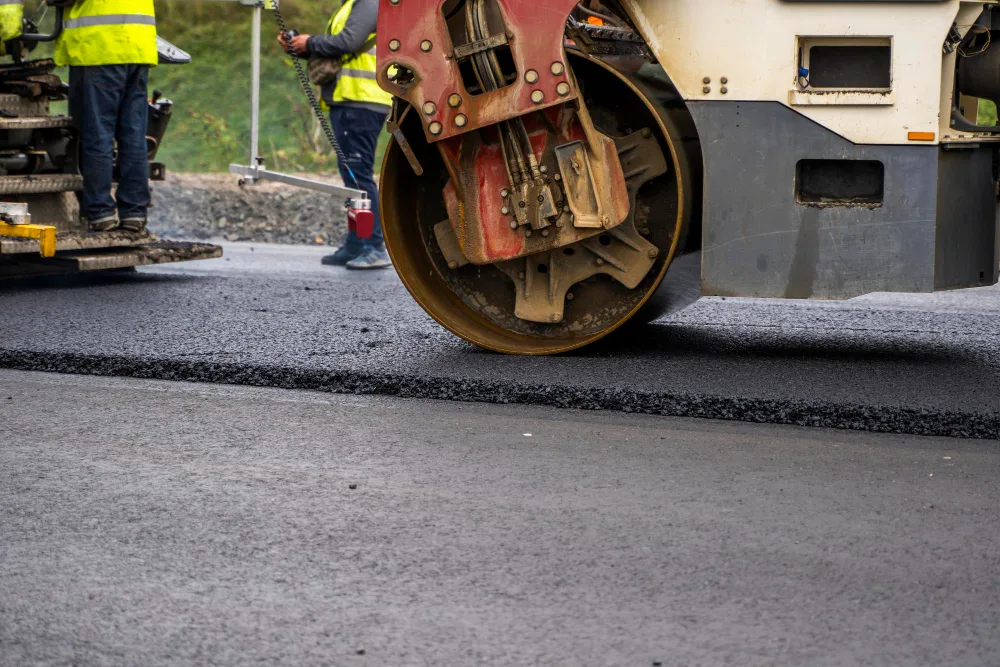
The process usually happens right after milling. Once the old surface is ground down and cleaned, we apply a tack coat (a sticky adhesive). Then, the new hot mix is spread and compacted. The result is a jet-black, smooth surface that looks brand new but costs a fraction of a full replacement.
We often recommend this for businesses looking into sealcoating in Lake County. If the damage is too serious for a simple sealcoat but not bad enough for a total tear-out, resurfacing is your middle-ground solution.
Milling vs. Resurfacing: What's the Difference?
Milling removes material, while resurfacing adds material. You almost always mill before you resurface, but you don't always resurface after milling (sometimes milling is done just to level a bump). They work together to fix your lot.
Here is a quick breakdown of when you need each:
- You need milling when: The pavement has become too high due to previous overlays (blocking drainage), there are widespread surface cracks, or the surface is uneven and holding water.
- You need resurfacing when: The asphalt is oxidized (gray) and brittle, there are minor cracks, but the base is stable, and you want to extend the lot's life by 10-15 years.
In neighborhoods like Dr. Phillips or Winter Park, where drainage is critical due to flat terrain, milling is essential. If you keep adding layers without milling, the parking lot eventually becomes higher than the garage floor or the sidewalk. That creates a drainage nightmare during our summer storms.
Why Does Florida Weather Destroy Parking Lots?
Florida asphalt faces a unique set of challenges that northern pavement doesn't. Our pavement temperature can reach 140°F or higher during the summer. This extreme heat softens the binder (the glue holding the rocks together), making the surface susceptible to indentations from heavy trucks or even kickstands.
Then there's the UV radiation. The sun dries out the oils in the asphalt, turning it gray and brittle. Once it's brittle, it cracks. Then the afternoon thunderstorm rolls in. Water seeps into those cracks, erodes the base, and suddenly you have a pothole.
We see this constantly with commercial properties needing sealcoating in Lake County. The cycle of heating up and cooling down, combined with heavy rain, accelerates wear and tear. A parking lot that might last 25 years in a mild climate might only get 15 years here without aggressive maintenance.
How Much Does Commercial Resurfacing Cost?
Commercial asphalt resurfacing typically costs between $2.25 and $3.00 per square foot in the Central Florida market. This price fluctuates based on the size of the job, the current price of oil (which affects asphalt costs), and how much milling is required for preparation.
If your lot needs extensive repairs before the new layer goes down—like fixing deep potholes or base failures—that cost will go up. However, compared to a full excavation and replacement, which can run upwards of $4.00 to $6.00 per square foot, resurfacing is a massive money saver.
According to data from HomeGuide, the national average for resurfacing falls in a similar range, but local labor and material availability in Orlando can shift these numbers slightly.
It's smart to budget for this every 12 to 15 years. Between those major resurfacing jobs, you should be doing regular maintenance, like sealcoating in Lake County, every 2 to 3 years. This maintenance costs pennies per square foot but saves dollars eventually.
Why You Need a Professional Contractor
We recently looked at a job site near Tavares where a "handyman" tried to patch a commercial lot with bags of cold patch from a hardware store. It was a mess. The patch didn't bond, water got underneath, and the hole doubled in size within three months.
Asphalt work requires heavy machinery and precise temperature control. The hot mix must be applied at roughly 300°F and compacted immediately. If it cools down too much before compaction, it won't last.
Professional contractors understand local codes, like the specific requirements in Orange County or Lake County regarding drainage slopes and ADA compliance. We know that in a place like Mount Dora, where the terrain rolls a bit more, water management is the priority. An unqualified worker usually just covers the cracks without fixing the drainage, leading to standing water and liability issues for your business.
Protect Your Pavement Investment
Your parking lot is the welcome mat for your business. A clean, smooth, striped lot tells customers you care about their safety and their experience. Whether you need a simple repair or a full resurfacing job, getting it done right the first time saves you headaches down the road.
Don't let potholes drive your customers away. If you manage a property and want to discuss resurfacing or sealcoating in Lake County, let's talk about your options.
Contact Reliable Pavement Maintenance, Inc. today at (407) 924-8228 to schedule a free on-site evaluation.